
Finding a dead wild animal near a home can be unpleasant, but the safest first response is usually simple: do not rush in. Keep people and pets back, note where the animal is located, and avoid touching the remains with your bare hands. In situations involving odor, difficult access, or visible contamination, a dead animal removal option may help avoid unnecessary exposure or property damage.
The level of concern depends on the animal, its condition, and its location. A small animal in an open part of a yard is different from a raccoon in a pool, a bird in a chimney, or a rodent that has died behind drywall. Taking a calm, methodical approach helps protect the household while making cleanup more manageable.
Start With Distance and Observation
Move children and pets indoors or to another part of the property. Do not let a dog sniff, lick, carry, or eat the animal. If the animal is near a walkway, driveway, or play area, keep others away until it can be addressed. Avoid handling nearby droppings, fur, nesting materials, or insects, since these can indicate that the animal had been using the area for some time.
Before doing anything else, inspect from a distance. Look for the likely species, whether there are multiple dead animals, signs of injury, unusual behavior reported before death, and evidence that another animal may still be nearby. A single dead squirrel outside may be routine, while several dead birds or mammals in the same area can warrant a call to local wildlife or public-health authorities.
When the animal is larger, inaccessible, badly decomposed, or located indoors, animal removal assistance may be a safer choice than attempting to pull apart building materials or reach into a confined space.
Why Location Changes the Response
Where the animal is found affects both removal and cleanup. Make a brief note of the location, the strength of any odor, visible staining or fluids, insect activity, and nearby openings where wildlife may have entered.
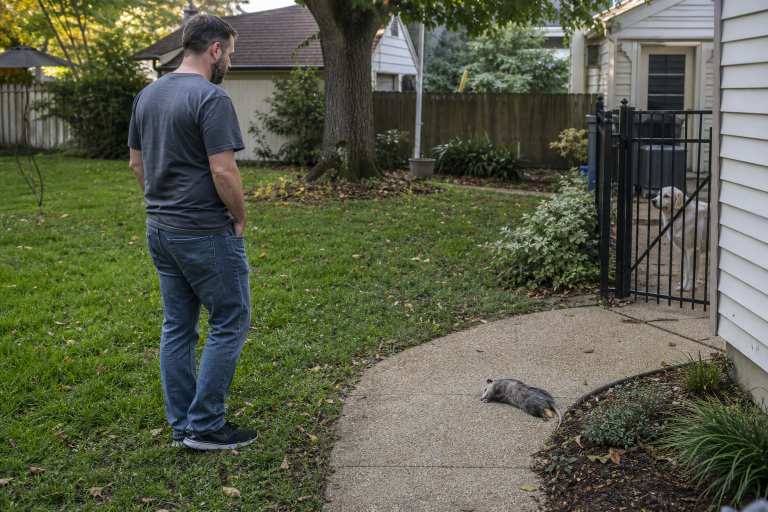
- Open yard or driveway: Usually the easiest place to isolate and assess, although local disposal rules still apply.
- Garage, shed, porch, or crawl space: May contain droppings, stored belongings, or nests that need careful cleaning.
- Attic, wall, ceiling, chimney, or duct: May require locating the remains without spreading debris or causing structural damage.
- Pool or water feature: Requires removal of the animal as well as attention to water treatment and filtration.
Check Reporting and Disposal Rules First
Rules for handling wildlife remains are not identical everywhere. They can vary by state, county, city, species, and whether the animal was found on private property or in a public area. Contact local animal control, wildlife officials, or a health department if you are unsure whether the animal should be reported or how it may be disposed of.
Extra caution is appropriate if the animal may have had contact with a person or pet. A bite, scratch, saliva exposure, or contact with an open wound should be discussed promptly with a medical professional or veterinarian. Do not attempt to test, transport, or preserve the animal yourself unless an official agency specifically gives instructions.
Use Basic Protective Gear for Accessible Small Animals
If local guidance permits self-removal and the animal is small and accessible, use protective equipment before approaching it. Cover cuts on your hands, wear clothing that protects your skin, and avoid touching your face during cleanup.
- Disposable or waterproof gloves
- Long sleeves, long pants, and closed-toe shoes
- Eye protection when splashing or debris is possible
- A shovel, scoop, net, or other long-handled tool
- Two durable plastic bags and a sealable outdoor trash container, if permitted locally
- An appropriate household disinfectant used according to its label
A Simple Outdoor Removal Process
- Keep pets and people away from the area.
- Put on gloves and other protective gear.
- Apply disinfectant to the animal and the surrounding hard surface as directed on the product label.
- Use a tool rather than your hands to place the remains into a bag.
- Seal the first bag, place it inside a second bag, and seal that bag as well.
- Use only a disposal method allowed by local rules.
- Disinfect reusable tools, remove gloves carefully, and wash hands thoroughly with soap and water.
For rodents, their droppings and nesting materials, do not sweep or vacuum dry debris. The CDC explains that cleaning up dead rodents and nesting materials safely involves wetting contaminated material with disinfectant first, then using gloves and bagging waste before disposal.
Hidden Indoor Animals Need More Care
A dead animal inside a wall, ceiling, attic, air duct, or crawl space may be noticed first by odor or flies. It can be tempting to cut into drywall immediately, but that can spread contaminated material, damage wiring, disturb insulation, or fail to reach the actual source. Look for the strongest odor area, insect activity, stains, or an entry opening, but do not force access if the location is uncertain.
After removal, hard surfaces can often be disinfected. Porous materials such as insulation, carpet padding, heavily soiled cardboard, or water-damaged drywall may need to be removed and evaluated. Ventilate the space when safe, but do not use fans that blow dust or contaminated debris through the home.
What to Do if an Animal Is Found in a Pool
Close the pool to swimmers, wear disposable gloves, and use a net or bucket to remove the animal. Double-bag the remains, clean the removal tool, and wash your hands immediately. The CDC’s guidance for responding to a dead animal in the pool also calls for checking filtration and maintaining appropriate chlorine, pH, and treatment time before swimmers return. Dead raccoons deserve particular caution because of possible parasite exposure.
When Professional Help Makes Sense
Do not treat every situation as a household cleanup task. Seek qualified help when there is a large animal, multiple carcasses, a strong indoor odor, significant fluids or staining, heavy fly activity, contaminated insulation, suspected illness, electrical hazards, or remains in a duct or difficult wall cavity. The same applies when a pet may have had direct contact with the animal.
Prevent the Next Wildlife Entry
Once the area is clean, inspect the property for likely access points. Repair torn screens, loose vent covers, damaged soffits, roof gaps, and openings around pipes or utility lines. Keep garbage secured, bring pet food indoors, remove fallen fruit, trim branches away from the roof, and reduce standing water where possible. Small maintenance steps can make a home less inviting to animals looking for food, shelter, or a nesting spot.
Common Questions
Can a dead animal make people sick?
Direct contact with remains, fluids, droppings, parasites, or contaminated dust can create avoidable exposure risks. Keeping distance, using gloves, and cleaning carefully reduces those risks.
How long can the smell last?
Odor can persist after removal if fluids, insects, nesting material, or contaminated porous materials remain behind. Hidden animals may be harder to locate and clean thoroughly.
Should children and pets stay away?
Yes. Keep them away until the animal is removed and the surrounding area is cleaned and dry.